
Are ready meals really that bad for you?
Peer reviewed by Dr Colin Tidy, MRCGPAuthored by Victoria RawOriginally published 17 Aug 2026
Meets Patient’s editorial guidelines
- DownloadDownload
- Share
- Language
- Discussion
- Audio Version
- Add to preferred sources on Google
Since the dawn of Delia, we’ve been told that ready meals are overpriced, overprocessed, and bad for our health. While there’s some truth to the cost argument, are today’s pre-prepared dinners really as unhealthy as their reputation suggests?
To find out, we asked a pharmacist to weigh up the pros and cons of the modern ready meal.
The rise of ready meals
Prioritising convenience over careful meal planning isn't always the healthiest choice. Yet new figures from the Department for Environment, Food & Rural Affairs (DEFRA) reveal that purchases of meat-based ready meals have increased by more than a tenth.
Ready meals are becoming an increasingly popular choice for busy households, but consumers are also paying more attention to nutrition.
A recent poll by The Food Foundation (FF) and the Food, Farming and Countryside Commission (FFCC) found that more than two-thirds of people believe the government should take a bigger role in making sure the nation's food is healthy.
Rather than opting for convenience alone, many are seeking healthier alternatives that offer the best of both worlds. But do genuinely healthy ready meals exist? And if so, what should you look for when choosing one?
Sobia Qasim, Superintendent Pharmacist at Curely, explains that there is a way for convenience and good nutrition to go hand in hand.
She notes that ready meals have changed significantly over the past decade and shoppers should focus on nutritional quality rather than assuming all convenience meals are unhealthy.
"Ready meals have long had a reputation for being unhealthy, but that's no longer true across the board,” she says. “For people taking weight loss medication, who often have a much smaller appetite, a well-balanced ready meal can actually make it easier to eat enough protein and other essential nutrients without having to prepare a full meal from scratch.
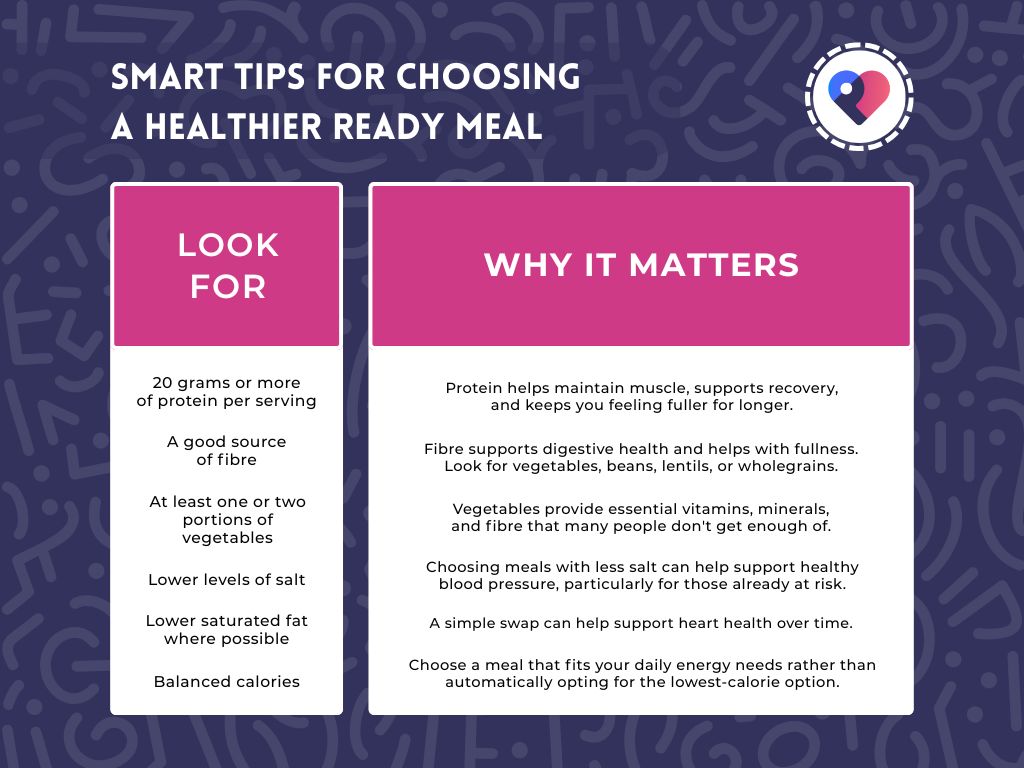
“Rather than judging a meal simply because it's pre-prepared, it's far more important to turn the packet over and check the nutrition information. Prioritise meals that are high in protein, contain vegetables, and are lower in saturated fat and added salt."
Sobia Qasim

What to look for on the label
To help separate the healthier options from the less nutritious ones, Qasim shares key factors to consider when buying a ready meal.
Quick hacks to level up your meal
There are several simple ways to increase the nutritional value of a convenience meal using ingredients you already have at home.
Qasim explains that one of the easiest ways to improve a ready meal is to add extra vegetables.
“Frozen vegetables, salad, or steamed greens can increase fibre and help you reach your recommended fruit and vegetable intake with very little extra effort," says the pharmacist.
“If the meal is lower in protein, adding foods such as grilled chicken, boiled eggs, or beans can also make it more satisfying and nutritionally balanced."
While home cooking remains ideal where possible, Qasim emphasises that convenience should not be viewed as the opposite of healthy eating.
"Healthy eating isn't about preparing every meal from scratch," she notes. "It's about making choices that are realistic and sustainable.”
Qasim adds that for many people - especially those taking weight loss medications - having a balanced ready meal in the fridge is a healthier option than skipping meals or regularly relying on takeaways. Looking for meals with a good balance of protein, fibre, and vegetables, while keeping an eye on salt and saturated fat, can make a real difference.
Are ready meals ever a good choice?
There are plenty of reasons why people might be hesitant about ready meals - from concerns over cost and plastic packaging to questions about their nutritional value. However, that doesn’t mean they need to be avoided altogether.
It’s clear from the latest figures that the way people shop and eat is changing. Convenience foods are becoming an increasingly common part of everyday meals as consumers look for quick, practical options to fit around busy lifestyles.
When chosen carefully, ready meals can provide a practical and nutritious option as part of a balanced diet - particularly when paired with extra vegetables. They can be a helpful option when preparing a larger meal feels difficult, managing a full meal alone isn’t always possible, or when there isn’t enough time to shop for and prepare every ingredient separately.
If you're concerned about heating food in plastic packaging, a simple solution is to transfer your ready meal into a heat-resistant container before cooking. Keep in mind that glass and ceramic dishes heat differently from thin plastic containers, so you may need to add an extra 30 to 60 seconds to the cooking time.
Patient picks for Healthy eating
Diet and nutrition
What is snackification, and why is it taking over our kitchens?
Snackification is all about eating smaller amounts more often. With busy schedules and the rise of weight loss medicines, many people are swapping three square meals for smaller, more frequent bites. This shift is even shaping how brands approach food and mealtimes. But is it actually healthy? We asked an expert to break down the pros and cons of this growing eating habit.
by Victoria Raw
Diet and nutrition
10 essential nutrients you might be lacking
According to a study published by the Health and Food Supplement Information Service (HSIS), UK diets have become less healthy in the past 30 years. We chatted with health experts about 10 important nutrients you might be missing in your diet.
by Victoria Raw
About the authorView full bio
Authored by

Victoria Raw
Feature Writer
BA (Hons), English Literature
Victoria is a content writer at Patient, with special interests spanning mental wellbeing, societal trends and the impact of technology on our health.
About the reviewerView full bio

Dr Colin Tidy, MRCGP
General Practitioner, Medical Author
MBBS, MRCGP, MRCP (Paediatrics), DCH
Dr Colin Tidy is an NHS Doctor, based in Oxfordshire.
Article history
Article also available in English, German, Spanish, French, Italian, Portuguese, Hindi, Hebrew, Arabic, and Swedish.
Next review due: 17 Aug 2029
17 Aug 2026 | Originally published
Authored by:
Victoria RawPeer reviewed by
Dr Colin Tidy, MRCGP
Join the conversation
Share your thoughts or experiences with others in our patient communities.

Ask, share, connect.
Browse discussions, ask questions, and share experiences across hundreds of health topics.

Feeling unwell?
Assess your symptoms online for free
Sign up to the Patient newsletter
Your weekly dose of clear, trustworthy health advice - written to help you feel informed, confident and in control.
By subscribing you accept our Privacy Policy. You can unsubscribe at any time. We never sell your data.