
COVID-19: Should you cancel your Christmas plans because of Omicron?
Peer reviewed by Dr Sarah JarvisAuthored by Lydia SmithOriginally published 21 Dec 2021
Meets Patient’s editorial guidelines
- DownloadDownload
- Share
- Language
- Discussion
- Audio Version
- Add to preferred sources on Google
It's the home stretch before Christmas Day, but things aren't looking so festive. Cases of the Omicron variant of COVID-19 are rising fast in the UK, with the total number of confirmed cases now surpassing 37,000. With the risk of hospitals becoming overwhelmed, many scientists have called for greater restrictions. So should you cancel your Christmas plans - or is it safe to go ahead with them?
The new COVID-19 strain Omicron was first reported less than a month ago, but it is spreading rapidly. A study by researchers in Hong Kong reported that the variant multiplies about 70 times faster inside human respiratory tract tissue than the Delta variant does. In addition, the Omicron strain reaches higher levels in the tissue 48 hours after infection, compared with Delta.
The severity of infection is still uncertain, too. Recent data from the COVID-19 Symptom Study app by Zoe and King's College London show the top five symptoms reported in the app for Omicron infection were runny nose, headache, fatigue (either mild or severe), sneezing and sore throat. Early data from South Africa suggests the risk of hospitalisation among people with the Omicron is about 29% lower than with the original COVID-19 variant - but that still means over 70% of the original risk remains.
However, symptoms may be more severe for some people, especially the vulnerable or unvaccinated. The government still lists fever, cough, and loss of sense of smell or taste as the main COVID-19 symptoms to watch out for.
Although healthcare workers and volunteers are working hard to get people vaccinated, there are still concerns around the efficacy of our vaccines against Omicron. Vaccines protect against serious illness and hospitalisation, but two vaccines alone may not provide as much protection against Omicron infection. However, research by Imperial College London suggests that getting a booster could provide between 80% to 85% protection against severe illness.
Should you cancel your Christmas plans?
Christmas parties and events with large numbers of attendees pose a higher risk of infection with Omicron. If multiple households get together on Christmas Day, the number of potential exposures is likely to climb.
It is also likely that the UK will enter another lockdown in response to the high and growing number of cases of Omicron. Scientific advisers have warned England's hospital admissions could reach 3,000 a day without new measures, which would put intense strain on the NHS. This would have serious implications for anyone needing medical treatment. While the government did not change its guidance on 20th December, neither did it rule out further restrictions.
It is important to remember that any gathering at Christmas can lead to infection with COVID-19, even in the vaccinated. "Omicron is set to be the dominant strain in the UK by Christmas, and in the New Year cases could hit a peak higher than anything we've ever seen before," says Professor Tim Spector, lead scientist on the ZOE COVID-19 Study app.
"Ahead of Christmas, if people want to get together and keep vulnerable family members safe, I'd recommend limiting social contact in the run-up to Christmas and doing lateral flow tests just before the big family gathering."
Rodney E. Rohde, a professor of clinical laboratory science and an infectious disease specialist at Texas State University, says it's important that people are fully vaccinated and boosted. "However, if one is not vaccinated (and now, boosted), then there is more risk involved," he says, adding it is about reducing the risk to yourself and other people.
"There is always an element of risk, but we can all reduce that risk if we layer the protection for ourselves and those around us."
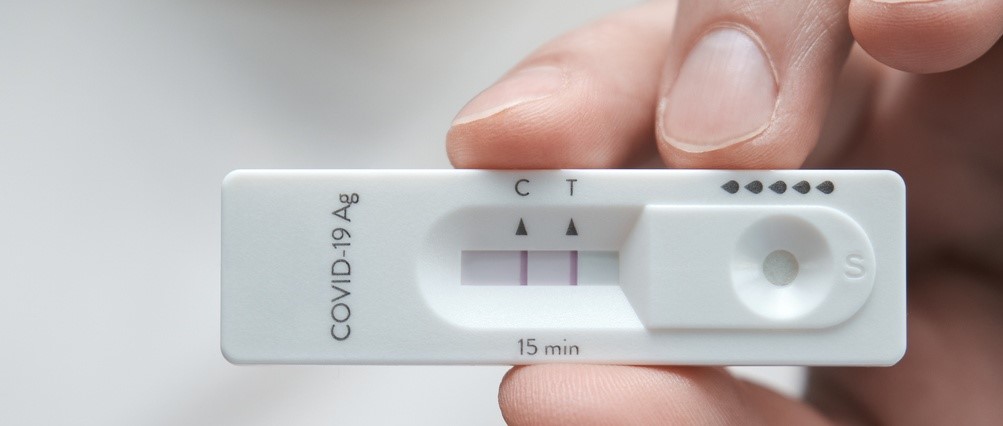
Make sure you do lateral flow tests
"There needs to be a special emphasis on care," says William Schaffner, a professor of preventative medicine at Vanderbilt University. "For example, all guests must be vaccinated (and ideally boosted at least 14 days earlier). Another layer of security could be provided if everyone got a rapid test the morning of the get-together.
"Those at high risk might consider limiting the number of seasonal parties they attend," he adds. "If they attend worship services, they ought to wear masks and sit apart from others. By being cautious we still can retain the spirit of the holidays."
In England, people without symptoms are advised to do rapid tests on days when they are more likely to catch or spread COVID-19. Examples might include, before mixing with other people indoors or when visiting someone at risk of becoming seriously unwell from the virus.
In Scotland, people have been advised to test before mixing with other households or visiting busy areas. People in Wales and Northern Ireland are also being asked to test before going to crowded places or visiting others.
If you do develop symptoms, it's important to do a PCR test as soon as possible and stay at home until you get your result. If it is positive, you need to self-isolate. The self-isolation period includes the day your symptoms started (or the day you had the test, if you do not have symptoms) and the next 10 full days.
Patient picks for Variants information
COVID-19
What we know about the new COVID-19 variants Eris and Pirola
With lockdowns a thing of the past, COVID-19 may not be at the forefront of everyone's minds - but it is continuing to spread. And as long as it does so, mutations of the virus, often referred to as different variants, will continue to emerge. Here we look at what we know about the two new strains, Eris and Pirola.
by Lydia Smith
COVID-19
COVID-19: Is Omicron a bigger threat than the Delta variant?
It has been less than three weeks after scientists in South Africa and Botswana sounded the alarm over a concerning new strain of COVID-19. Since then, the Omicron variant has spread quickly, leading to a speeding up of the booster vaccination programme in the UK. But is the Omicron variant a bigger threat than previous strains - and what do we know about it so far?
by Lydia Smith
About the authorView full bio
Authored by

Lydia Smith
Feature writer
BA, MA, MSc
Lydia Smith is an award-winning journalist and feature writer who has written extensively on women's health and mental health. She is currently studying for an MSc in psychology.
About the reviewerView full bio

Dr Sarah Jarvis
Clinical Consultant
MA (Cantab), BM, BCh (Oxon), DRCOG, FRCGP, MBE
After training in medicine at Cambridge and Oxford, Dr Sarah Jarvis MBE became a GP.
Article history
Article also available in English, German, Spanish, French, Italian, Portuguese, Hindi, Hebrew, Arabic, and Swedish.
21 Dec 2021 | Originally published
Authored by:
Lydia SmithPeer reviewed by
Dr Sarah Jarvis
Join the conversation
Share your thoughts or experiences with others in our patient communities.

Ask, share, connect.
Browse discussions, ask questions, and share experiences across hundreds of health topics.

Feeling unwell?
Assess your symptoms online for free
Sign up to the Patient newsletter
Your weekly dose of clear, trustworthy health advice - written to help you feel informed, confident and in control.
By subscribing you accept our Privacy Policy. You can unsubscribe at any time. We never sell your data.