How can you prevent osteoporosis during the menopause?
Peer reviewed by Dr Colin Tidy, MRCGPLast updated by Lawrence HigginsLast updated 29 May 2026
Meets Patient’s editorial guidelines
- DownloadDownload
- Share
- Language
- Discussion
- Audio Version
- Add to preferred sources on Google
Menopause increases your chance of having osteoporosis - which weakens your bones and may cause them to fracture easily. This is because menopause causes oestrogen - the hormone that protects bones - levels to drop. We look at how to lower your chances of getting osteoporosis.
Sign up for our free 10-week Menopause course!
Each week, we'll explore different topics to help you better understand and navigate your menopausal journey, including HRT, diet, exercise, and mental health.
By subscribing you accept our Privacy Policy. You can unsubscribe at any time. We never sell your data.
What is osteoporosis?
Helen O'Leary, physiotherapist and director of Complete Pilates, says that you can have osteoporosis in one area of your body, but not another. Therefore, you will usually have both your hip and lumbar spine assessed and may find that one is osteoporotic and the other not.
Osteoporosis is diagnosed by the results of a DXA scan, which assesses your bone mineral density. DXA scanning may be recommended if you previously had a broken bone from a minor injury, to see if low bone density has contributed to your fracturing. It may also be done if you have an X-ray and the doctor thinks that the bones look like they may have reduced density.
Another reason to be assessed is if you are in a high-risk group due to family history, medical history, or medicines that you are taking.
"The important thing to remember with osteoporosis is that the risk of fracture is as osteoporosis is a silent condition and does not affect you until you break a bone. It is the outcome of fractures which affect quality of life, particularly as we get older," says O'Leary.
Osteoporosis symptoms
Osteoporosis is described as a silent disease, meaning there are no visible symptoms that could help you identify the condition. Pain will only be felt if there are breaks in a bone.
However, O’Leary says that, if you have had osteoporosis for some time and have had spinal fractures, it is common to lose height as the bones in the back become thinner. This can also affect your posture, causing an increased curve in the spine, as well as leading to back pain.
The link between menopause and osteoporosis
It has been shown that up to 20% of bone loss occurs during the menopause, due to the reduction in oestrogen levels. This puts those going through the menopause and after menopause at a higher risk of osteoporosis.
How to prevent osteoporosis in menopause
"We can't necessarily prevent osteoporosis in menopause as it depends on so many different factors. However, there are various things we can do to reduce the risk of osteoporosis in menopause and, importantly, reduce the risk of breaking a bone," O’Leary says.
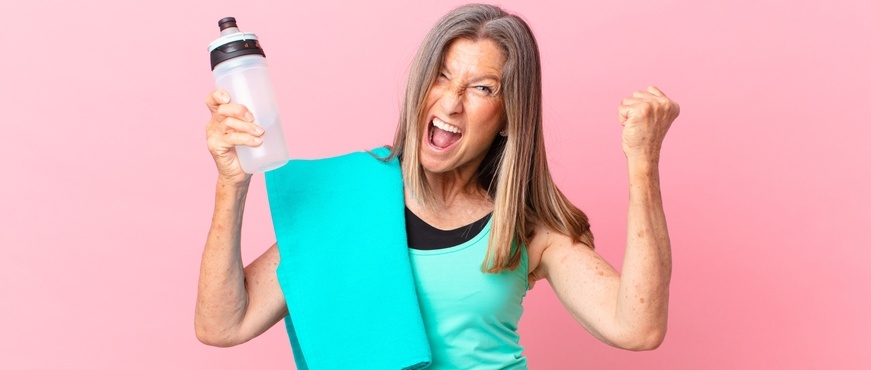
Exercise is recommended for reducing your risk of breaking a bone, but it must be done safely.
Exercise regularly - follow the government guidelines of 150 minutes per week.
Exercise should include 2-3 sessions per week that are using weights, body weight, or resistance exercise.
Exercise should include balance training to reduce the chance of falls.
The protective element specific to osteoporosis is impact. This means running, jumping, skipping, dancing, hopping, and basically anything that gives impact to the bones can help stimulate bone development.
The specific exercises that are good for you will depend on your diagnosis, your medical history and current exercise profile. This is something that should be advised on by an exercise professional who specialises in osteoporosis, such as a physiotherapist.
Other steps you can take to reduce your risk of bone breakage
Ensure you have a consistent balanced diet with enough calcium. It is generally advised to have 1,300 mg per day.
Ensure you have enough vitamin D. The UK government recommends that everyone in the UK consider taking a daily 10 microgram (400 IU) vitamin D supplement during the autumn and winter months (October to March).
Reduce your alcohol intake.
HRT and osteoporosis
Taking hormone replacement therapy (HRT) reduces your risk of osteoporosis. If you go through premature menopause - before the age of 40 - your risk of osteoporosis is much higher than average. It is likely that your doctor will recommend that you take HRT until at least the age of 51, which is the average age women go through menopause. They may make the same recommendation if you go through 'early menopause' - between the ages of 40 and 44.
HRT can also be helpful in relieving menopausal symptoms - your doctor will discuss the risks and benefits with you.
Can you reverse osteoporosis after menopause?
O'Leary says you are unlikely to increase your bone density after menopause without taking bone-building medicines - and even these will often only delay or halt decline in bone density. These are only prescribed on diagnosis of osteoporosis and under the guidance of your GP or rheumatologist.
"Our bone density is built up in puberty and through our life until around the age of 30. At this stage it starts to reduce, with a more rapid decline at menopause. The biggest changes can be made in puberty, which is why it is important to encourage teenage girls to exercise and eat healthily. We then have a bigger deposit in our 'bone bank' so that, as we lose bone density, we hopefully do not fall into the osteoporosis range."
However, it is absolutely possible to reduce your risk of breaking a bone by using the methods above.
When should I see a doctor for osteoporosis?
"If you break a bone from what seems like a minor injury, it is very important to follow up with a bone density scan to check that osteoporosis is not a factor," O'Leary stresses.
"If you have been taking medicines that can cause bone loss - such as prolonged steroids or certain types of cancer drugs - then it will usually be recommended that you have a DXA scan."
Also, you should speak to your doctor about a DXA scan if you have risk factors for osteoporosis. These include:
Having a body mass index (BMI) under 18.5.
Having gone through the menopause before the age of 45.
A history of your periods stopping for at least 6-12 months before you went through menopause.
Having a parent or sibling with a history of osteoporosis.
Being very immobile.
Certain medical conditions such as coeliac disease, Crohn's disease, overactive thyroid gland, Cushing's syndrome, chronic kidney disease, type 1 diabetes, chronic liver disease, or rheumatoid arthritis.
Drinking more than two units a day of alcohol, as well as smoking, also increase your risk of osteoporosis.
There are drug treatments available that either build bones or slow the breakdown of bones which will be recommended for you. It is a good idea to see a rheumatologist who specialises in bone health to manage your care.
It is also a good idea to speak to an exercise professional who specialises in bone health to design a bespoke exercise programme for you.
Lastly, a dietician can be really helpful in ensuring you are getting all the nutrients you need to support your bone health and the rest of your body systems through the menopause.
Patient picks for Menopause and HRT
Hormones
HRT: fact-checking risks and benefits
Myths persist about side effects and risks of hormone replacement therapy (HRT) for menopause. Here we fact check the reality behind the rumours and misconceptions and give you the truth about taking this medicine which plays a vital role in helping you live with menopause more comfortably and healthily.
by Lawrence Higgins

Hormones
Gaynor Faye on Hot Flash, menopause - and why midlife women deserve to be seen
The conversation around menopause is changing, bringing long-overdue honesty and humour to an experience too often overlooked. So when actress Gaynor Faye read Jan Birley’s script for the upcoming comedy feature, Hot Flash, she knew she wanted to be involved. I spoke to Gaynor about playing Geri, a single mum launching her own business while navigating midlife, and how her own menopause experience shaped both her performance and her passion for bringing Jan’s message to a wider audience.
by Victoria Raw
About the authorView full bio
Emily Jane Bashforth
Feature Writer
NCTJ
Emily is a Feature Writer with Patient, writing articles on a variety of topics relating to health and well-being.
About the reviewerView full bio

Dr Colin Tidy, MRCGP
General Practitioner, Medical Author
MBBS, MRCGP, MRCP (Paediatrics), DCH
Dr Colin Tidy is an NHS Doctor, based in Oxfordshire.
Article history
The information on this page is peer reviewed by qualified clinicians.
Article also available in English, German, Spanish, French, Italian, Portuguese, Hindi, Hebrew, Arabic, and Swedish.
Next review due: 30 May 2029
29 May 2026 | Latest version
18 Oct 2021 | Originally published
Authored by:
Emily Jane Bashforth
Join the conversation
Share your thoughts or experiences with others in our patient communities.

Ask, share, connect.
Browse discussions, ask questions, and share experiences across hundreds of health topics.

Feeling unwell?
Assess your symptoms online for free
Sign up to the Patient newsletter
Your weekly dose of clear, trustworthy health advice - written to help you feel informed, confident and in control.
By subscribing you accept our Privacy Policy. You can unsubscribe at any time. We never sell your data.
More in hormones
- Could your 'morning dread' be a sign of perimenopause?
- Do you need a hormone imbalance test?
- How to lower cortisol levels: 10 proven ways
- How to manage skin issues at menopause
- How your periods change during perimenopause
- HRT: fact-checking risks and benefits
- Looking after your health during the menopause
- Menopause - the questions to ask
- Menopause and exercise
- PCOS diet: What to eat to manage symptoms
- The best foods for hormonal health
- The truth about PCOS and menopause
- What are EDCs and why should you worry about them?
- What are the side effects of HRT?
- What is inflammaging - and why should women care?
- What is postmenopausal depression?
- What's the link between menopause and cholesterol?
- Why getting outdoors can support you through menopause
- Your diet and the menopause